

30 April 2026
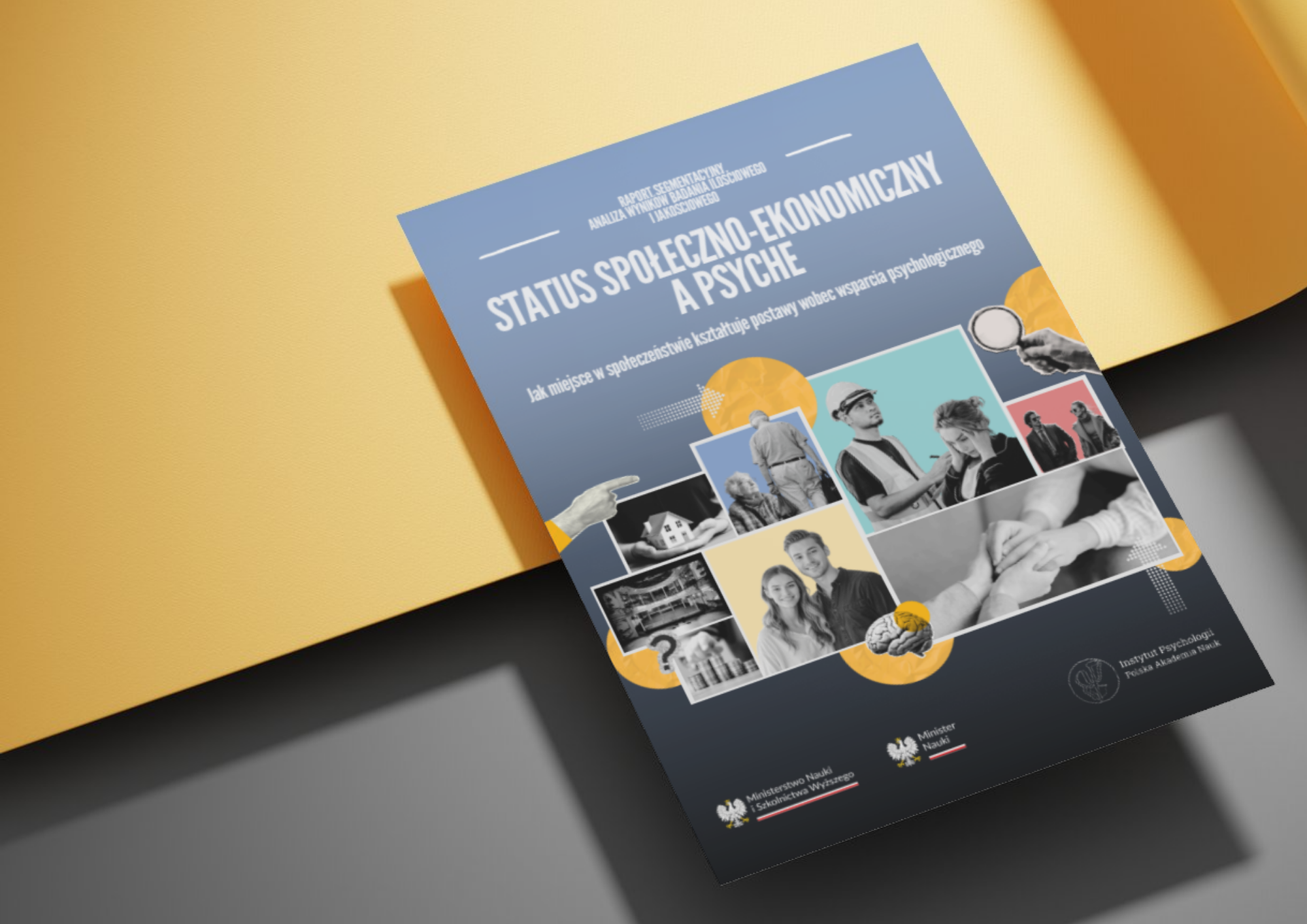
Between social identity and distrust of psychologists: the role of class-based narcissism
A new publication by researchers from the Political Cognition Laboratory and the Institute of Psychology of the Polish Academy of Sciences in the British Journal of Psychology!
Our latest research examines hostile perceptions of psychologists, focusing on the phenomenon of class narcissism, understood as a defensive belief in the uniqueness and superiority of one’s own social group (a stratum/class linked to socioeconomic status).
Studies conducted in both Poland and the United States show that class narcissism fosters conspiracy beliefs, according to which psychologists use their knowledge to control or manipulate others. Importantly, our findings indicate that these beliefs are associated with lower levels of mental health literacy and lead to negative attitudes toward seeking professional psychological help.
The results suggest that the way we perceive science and experts is strongly linked to our social identity, and understanding this relationship may be crucial for the effective promotion of mental health.
We encourage you to read it: https://bpspsychub.onlinelibrary.wiley.com/doi/10.1111/bjop.70071
Citation: Molenda, Z., Marchlewska, M., Michalski, P., Rogoza, M., Bagrowska, P., Adamczyk, D., Grzeszczuk, M., Gawęda, Ł., Pochwatko, G., & Karakula, A. (2026). Habitus of doubt? The role of social class narcissism in shaping psychological help conspiracy beliefs. British Journal of Psychology, 00, 1–21. https://doi.org/10.1111/bjop.70071
Funded by the Minister of Science as part of a commissioned task entitled The first stage of the research and intervention program: Psychology for Society (Agreement No. MNiSW/2024/DAP/223).