

14 July 2026
A Busy Summer for the Political Cognition Lab
The past few weeks have been an exciting and productive time for members of the Political Cognition Lab. Alongside our ongoing research, we participated in several scientific events, presenting our latest findings and engaging in discussions with researchers from Poland and around the world.
Annual IP PAN Seminar in Jabłonna
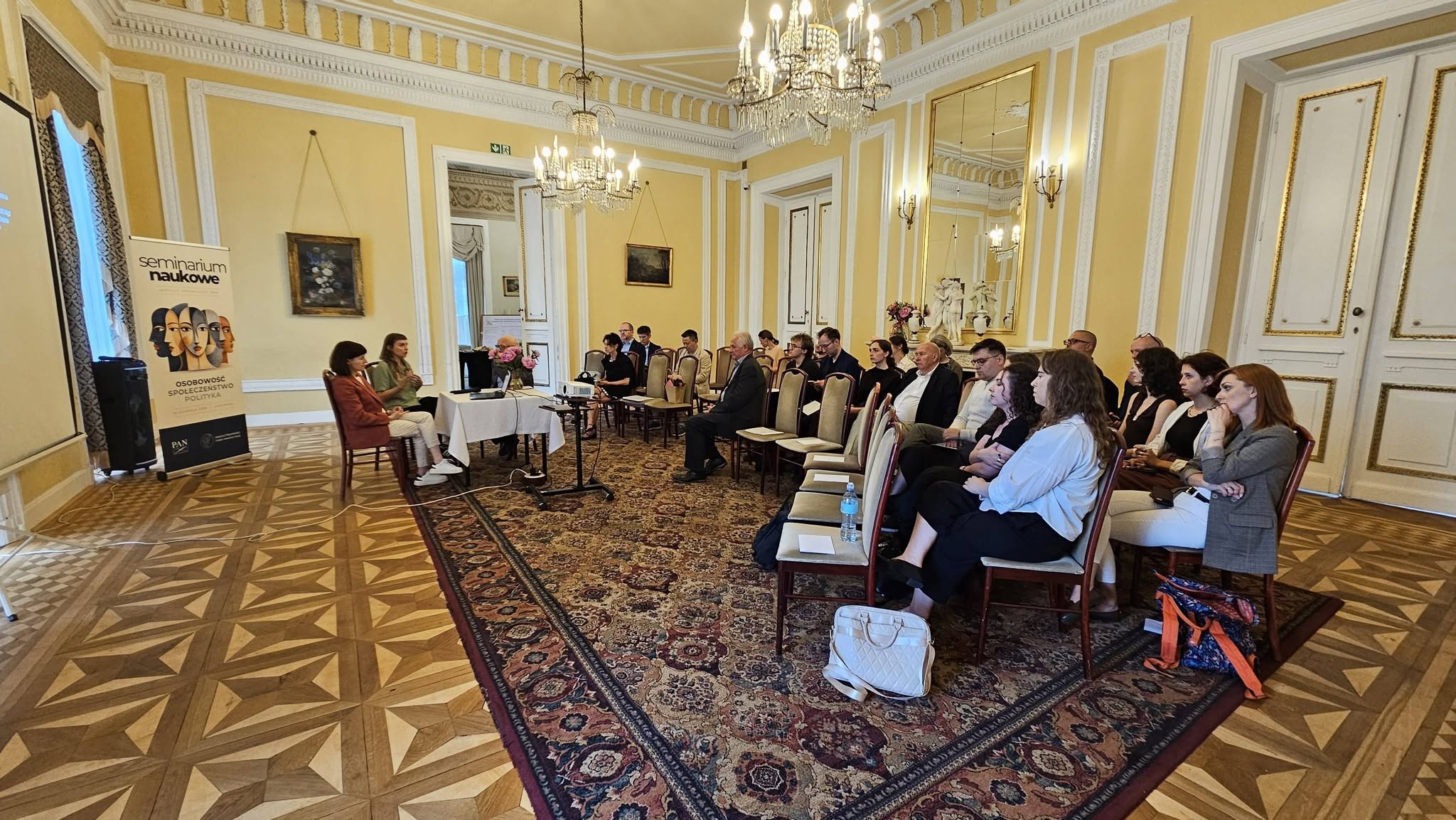
On June 18, 2026, the Political Cognition Lab, together with the Personality Psychology Unit of the Institute of Psychology, Polish Academy of Sciences, co-organized the Institute's annual seminar at the Jabłonna Palace.
The event brought together researchers working at the intersection of personality and political psychology, providing an opportunity to exchange ideas and discuss current research. This year's seminar was dedicated to Professor Janusz Reykowski in recognition of his outstanding contributions to political, social, and personality psychology. We were honored to celebrate the occasion with Professor Reykowski in attendance.
EASP General Meeting 2026
Our team also participated in the EASP General Meeting 2026 in Strasbourg, where we joined researchers from across the globe for several days of stimulating presentations, discussions, and networking.
Professor Marta Marchlewska and Professor Aleksandra Cichocka organized a symposium featuring presentations by Dominika Adamczyk, PhD, Carla Grosche, and Jiayan Mao, PhD. Adam Karakula presented a research poster, while Dr. Zuzanna Molenda shared her work during a blitz talk session.
Social Identity Meeting 2026
Members of the Political Cognition Lab also attended the Social Identity Meeting 2026, organized by the School of Psychology at the University of Kent in collaboration with Northern Arizona University.
During the conference, our team presented research on social identity, conspiracy beliefs, and the psychological processes underlying attitudes and intergroup relations. Held in the unique setting of Canterbury Cathedral, the meeting provided an excellent opportunity to discuss how social identity shapes contemporary social and political phenomena.
We are grateful to the organizers of all three events for creating inspiring spaces for scientific exchange. We look forward to continuing these conversations and developing new collaborations in the months ahead.